Our site is getting a makeover! Please bear with us whilst we make improvements

10 Tips For Sewing With Chalk Cloth Fabric

10 Tips For Sewing With Chalk Cloth Fabric

In this comprehensive guide to sewing with Chalk Cloth, you will learn 10 tips for sewing with chalk cloth fabric. In addition, you will also learn the benefits of using it for your different projects.

Look at our amazing Chalk Cloth it is so much fun to stitch with.

It works exactly like a traditional chalk board but it is a fabric. You can write on it, draw on it and the great thing is, it’s wipe clean, so that you can use it again and again.


(more…)

How To Use Odicoat Fabric Coating Gel

How To Use Odicoat Fabric Coating Gel

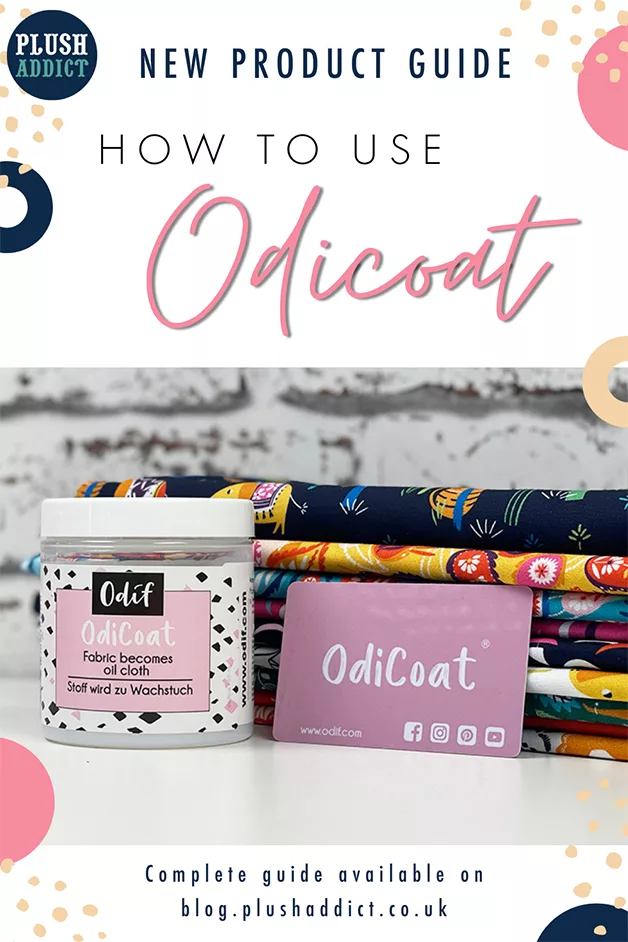
You will learn how to use Odicoat fabric coating gel in this tutorial. In addition, we will be guiding you on its various benefits and uses.

Ever found the perfect fabric with the wrong composition for your project? If the missing element was waterproofing then we have discovered a brilliant solution; Odicoat. This clever gel gives fabrics a waterproof coating that is machine washable.

This isn’t the only use for this clever product, Odicoat also works as a fabric glue; Fabric can be applied to objects for decorative purposes.

A product guide for beginners

There are a few ways to waterproof fabrics, depending on the finish you are looking for.

Below you’ll find both a video tutorial on how to use Odicoat fabric coating gel as well as a more detailed photo tutorial so you can learn all about Odicoat! We hope you this post helpful.. Do let us know in the comments.

You’ll also find a cheeky discount code for your next Odicoat purchase at the end of the tutorial…

Boring Legal Bit: If you follow any tutorial or guidance found in this post, or on this blog, you agree to be bound by our disclaimer which can be viewed here

Why use Odicoat?

Benefits of Odicoat

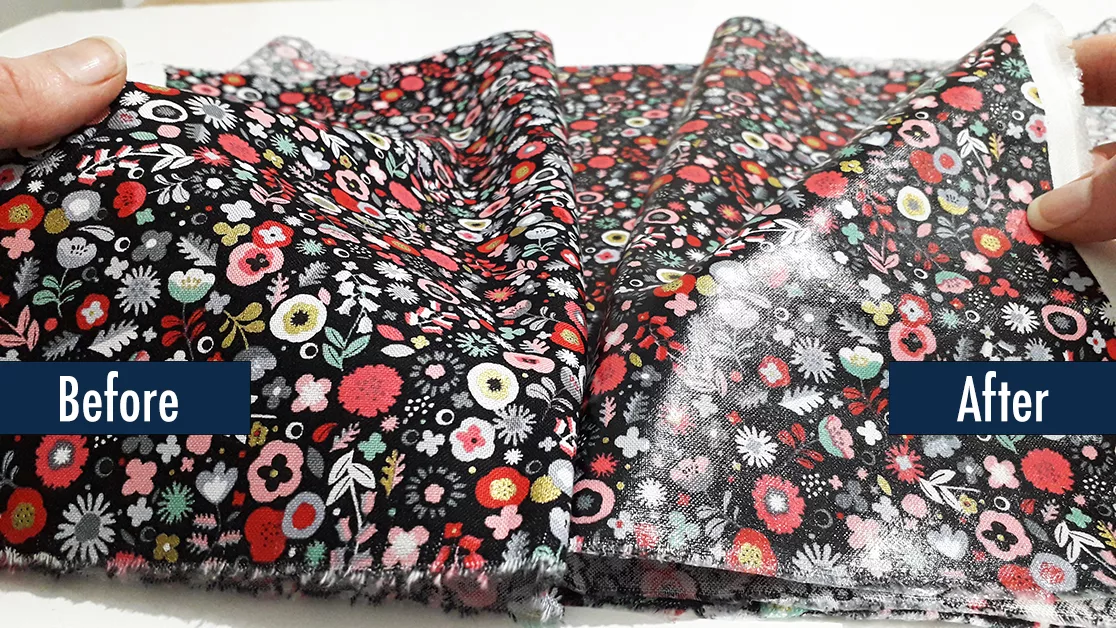
  •  Odicoat leaves fabric with a lightly rubberised feel; think of the finish (3 coats) as a more pliable oilcloth
  • Once application is complete the fabric is machine washable up to 30 degrees
  • Coated fabric is easier to cut, more durable and less prone to fraying
  • The finished fabric can be sewn, as you would PUL or oilcloth fabrics. Check out our full Waterproof Fabric Guide for more info
  • Waterproof fabrics offer greater stain resistance
  • Odicoat is water based, BPA free and acid free
  • Treated fabrics have a little more structure

Uses for Odicoat

  • Aprons
  • Tablecloths
  • Placemats
  • Wash bags
  • Make up bags
  • Embellishing decorative items
  • Outdoor cushions

Additional information

  •  A single coat will give a matt finish, 2 or 3 coats will give a gloss finish:

1 coat – the fabric is protected, water repellent, with a matt finish

2 coats – the fabric is coated, with a gloss finish

3 coats – the fabric is waterproofed, with a high gloss finish

  • Fabrics coated with Odicoat should only be washed at 30o
  • Prepare your fabrics as per manufacturers care advice before applying Odicoat
  • Use clips or pin within the seam allowance – pin holes will remain visible
  • Treated fabrics will have less drape
  • We recommend testing the suitability of Odicoat on spare pieces of the project fabric/ hidden area of an object before proceeding
  • Not suitable for thick velvet, suede or embossed fabrics
  • Foods must not make direct contact with Odicoat treated items
  • Odicoat is made in France by Odif

Disclaimer

  • Odicoat should only be used for it’s intended purpose
  • Follow the usage instructions
  • Always wash hands after use
  • Not for consumption
  • Keep out of the reach of children
  • Odif cannot be responsible for dangerous storage conditions or misuse

How to apply Odicoat

You will need:

Here we used:

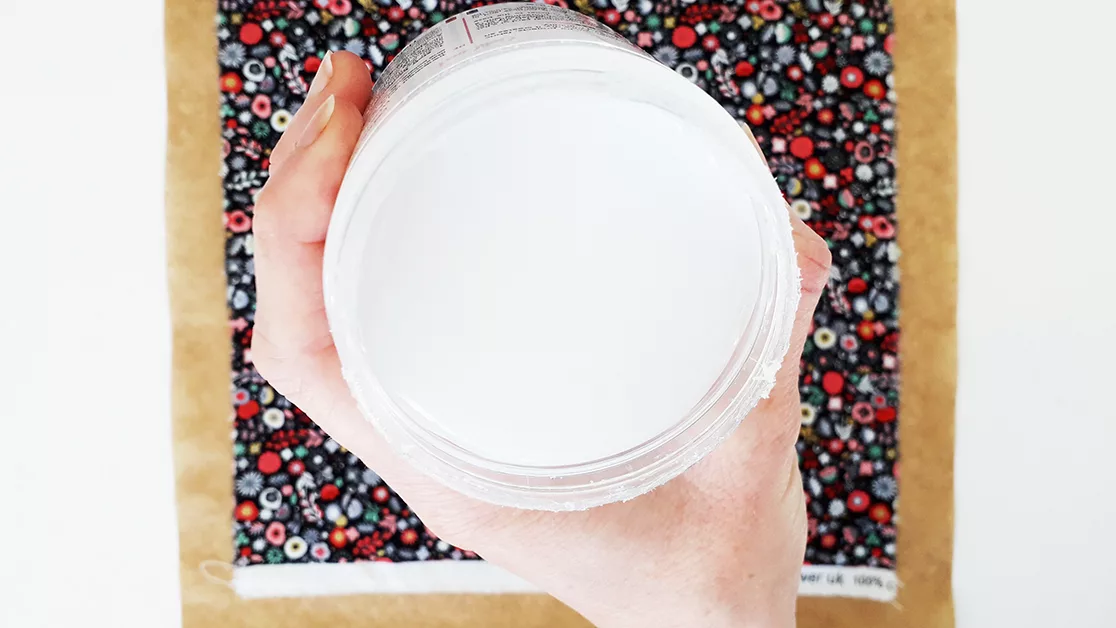
1. Before cutting fabrics to size, in case of shrinkage, apply the Odicoat to the right side of the fabric: Place your fabric right side up on a protected surface (greaseproof or plastic sheeting are ideal)

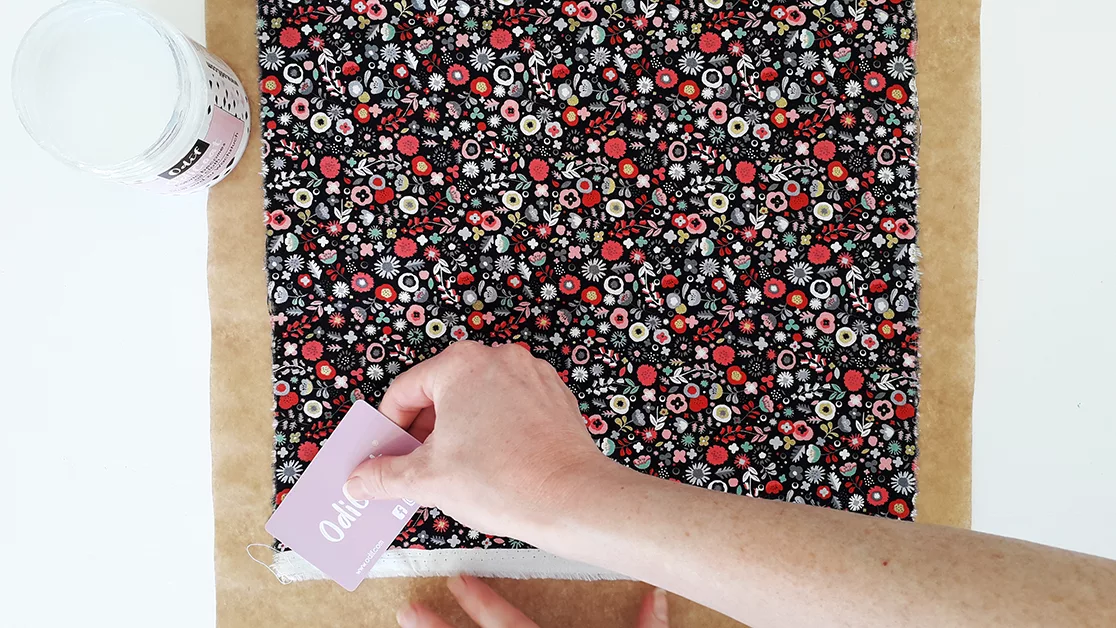
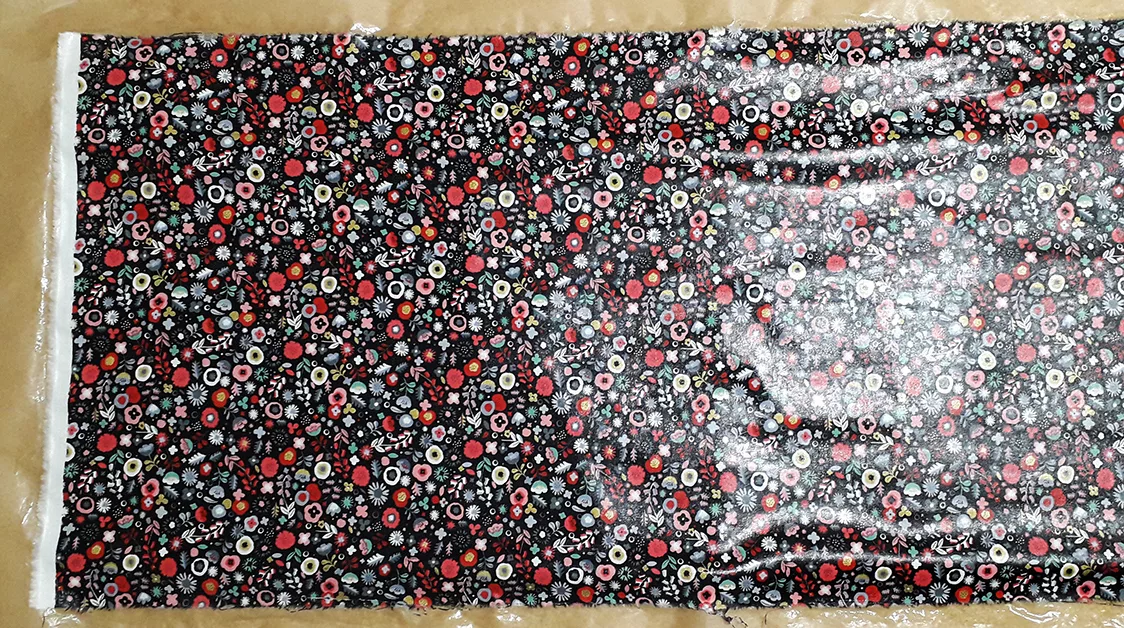
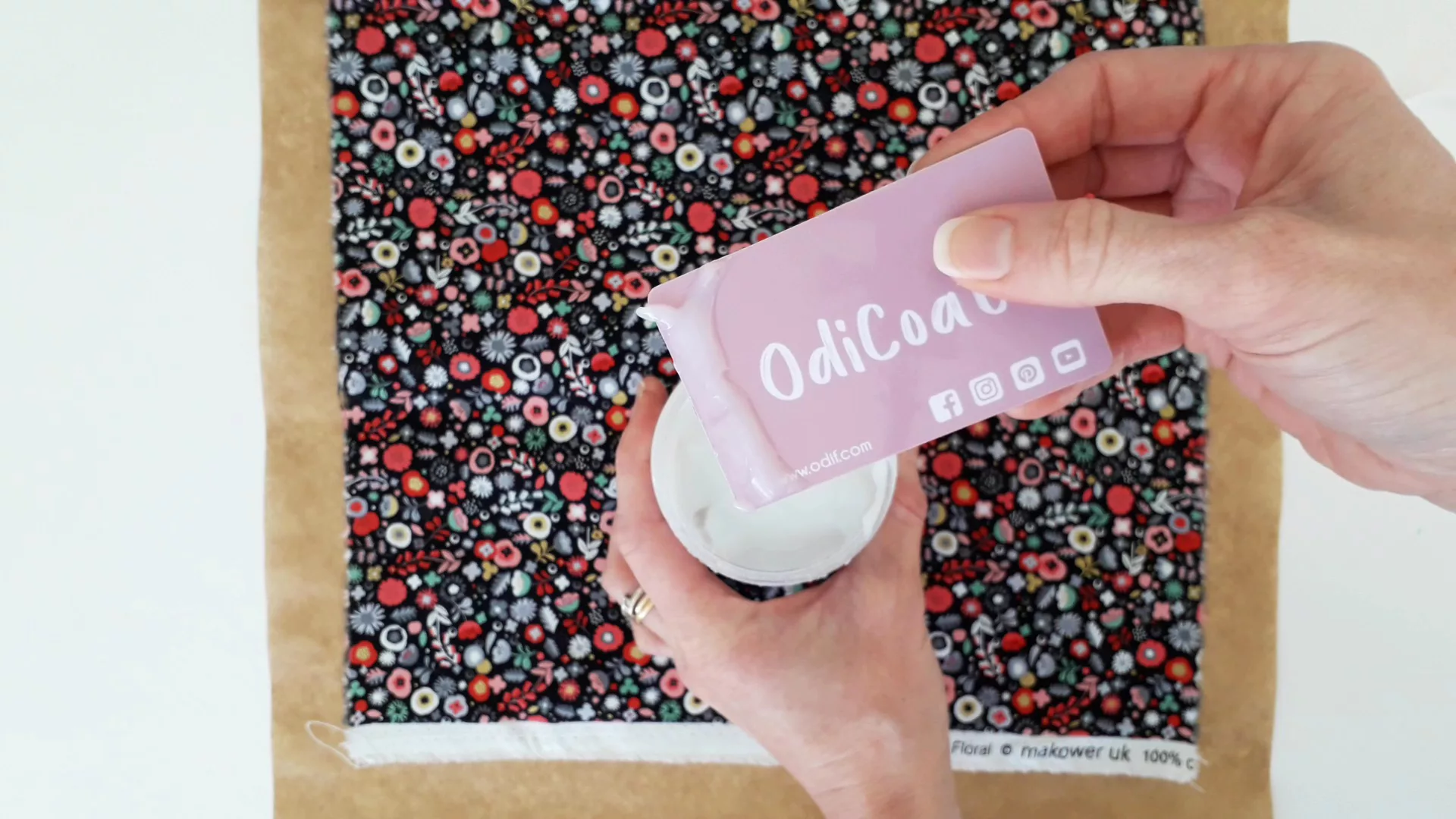
2. Using the card provided spread a thin layer of Odicoat onto the fabric; start from one corner and work outwards. Go back over the fabric with the card spreading out any thick patches/ streaks. Avoid moving the fabric until it is dry to prevent Odicoat getting onto the wrong side

3. Wait until the Odicoat is touch dry (20 to 30 minutes), cover with greaseproof and dry iron, heat setting 1/satin

4. Apply a second coat, as per steps 2. And 3. A third coat can be applied if required

5. Allow 24 hours for the Odicoat to cure fully then carefully peel the fabric off

How to use Odicoat as a glue

Odicoat can be used to stick fabric to wood, cardboard, metal, glass, ceramic, pottery, Styrofoam and stone. Once applied the Odicoat will give a water-resistant, satin finish:

1. Apply Odicoat to the back of the fabric being adhered with a flat brush

2. Position the fabric on the chosen surface

3. Apply another coat of Odicoat over the fabric

4. Wait 1 hour

5. Apply a second coat (optional)

6. Wait 24 hours


Check out our video below!

And you’re finished, well done!

Pin this for later!

We hope you found this tutorial useful!

How To Sew a Buttonhole Tutorial

How To Sew a Buttonhole Tutorial

How To Sew a Buttonhole

Sewing a buttonhole might look a little intimidating at first, but with this handy step by step guide, you will learn how to sew a buttonhole. As a result, you’ll be sewing on buttons with ease!

We’ve even included some troubleshooting tips…

Don’t miss the video showing you this technique which you can view at the end of the photo tutorial…

How to sew a Buttonhole tutorial

Boring Legal Bit: If you follow any tutorial or guidance found in this post, or on this blog, you agree to be bound by our disclaimer which can be viewed here

How to sew a buttonhole

1.. Every sewing machine varies in terms of the settings needed but the basic principles remain the same. Check the machine manual for how to set up the machine.

It will most likely advise the need for a buttonhole foot (not essential but makes it easier to track progress), the stitch selection needed and a tension adjustment (mark the normal tension setting with a sharpie/ take a picture for resetting the machine after)

2. Measure the button

For irregular shaped buttons; buttons pass through the hole from any direction so a narrower measurement can be used provided the button isn’t excessively long. If a longer measurement is used the button may come undone in use. If in doubt, practice on a scrap of fabric first.

3. Mark the length of the button parallel to the placket edge, central to a placement mark

Button holes allow movement; the direction of the hole is determined by the most likely direction the fastened button needs to move. The foot of a duvet won’t move much, therefore the button holes are positioned for best fit.

4. Extend the button hole line by approx. 2mm top and bottom to allow room for the top and bottom closing bar

5. Prepare the machine to sew a button hole, then wind the hand wheel until the needle is positioned to the inside of the button hole (the right)

How to sew a button hole - line up the front of the buttonhole

6. Position the placket under the presser foot. Line up the front of a button hole marking under the needle. Move the hand wheel until the needle is in the fabric at the front of the marked line

Position the placket under the presser foot

7. Begin sewing the first part of the button hole; the column of small zig zag stitches on the left side. The fabric will move forwards instead of backwards. Stop sewing when the other end of the marked line is reached.

When sewing ensure the stitches run straight and follow alongside the marked line; this can be the trickiest part of sewing a button hole. The fabric will move slowly, do not be tempted to pull the fabric to speed it up, the stitches need to be close together, hence the fabric moving a small amount each time the needle raises.

8. With the needle raised, set the machine to sew the 2nd part of the button hole; the closing bar

9. Sew 4 stitches for the bar, forming the wider stitches that span the top of the button hole

10. With the needle raised, set the machine to sew the 3rd part of the button hole; the right column

11. Sew along the other side of the marked line, the fabric will move backwards. Follow alongside the marked line and don’t let the stitches overlap the 1st column

12. With the needle raised, set the machine to sew the 4th part of the button hole; the closing bar

13. Sew 4 stitches for the bar, forming the wider stitches that span the bottom of the button hole

14. With the needle raised, set the machine to sew the final, and easily forgotten, part of the button hole; lock stitch.

15.  Sew 3 or 4 stitches to secure the thread ends then cast off.

16. Repeat for the other button holes, then reset the machine for normal sewing.

Opening the button hole

17. There are a number of ways to do this, with any method take care to avoid cutting through any stitches.

Before cutting a buttonhole place a button between the closing bars to check the button hole for size, if the buttonhole is too big/ small see the troubleshooting tips below.

Buttonhole is opened and loose threads trimmed

  • Fold the buttonhole in half lengthways and using small fabric or embroidery scissors make a small cut between the 2 columns of stitching. Unfold the button hole and cut up to, but not through, the closing bar at each end.

Insert a seam ripper through the fabric

  • Insert a seam ripper through the fabric between the 2 side columns and make a small hole. Using small fabric scissors cut between the 2 columns of stitching up to, but not through, the closing bar at each end. You can place a pin at the end of your button hole to ensure your seam ripper does not cut through your button hole stitches.
  • TIP: Place a pin at either end of your button hole to ensure the seam ripper doesn’t cut your stitches

Insert the point of a seam ripper

  • Position a pin just below the top closing bar. Just above the bottom bar insert the point of a seam ripper and carefully cut between the columns with the ripper until the ripper blade meets the pin.
  • Insert the point of the seam ripper close to the stitching of one closing bar and cut between the columns to the centre. Repeat from the other end of the button hole

    Open the buttonhole

    Once the buttonhole is opened any loose threads can be trimmed

    18. Test the button fits through the finished buttonhole.

    Buttonhole troubleshooting

    • Always practice buttonholes on a spare piece of the project fabric to check for adjustments
    • Buttonholes are difficult to unpick but not impossible, ideally unpick a problem button hole before cutting it open. Though not impossible, it is harder to sew over an already cut button hole
    • If a buttonhole is a little too big the closing bars could be extended inwards with a few more stitches. Set up the machine for a closing bar, line the buttonhole up under the needle and sew a few stitches, not forgetting to lockstitch start and end to secure. If a large adjustment is needed, add a few stitches to the top and bottom to even out the appearance, or consider unpicking and trying again.
    • If a button hole is too small the easiest solution is to unpick and start again. Or the top closing bar can be unpicked, lock stitch overlapping the top stitches of the left column, extend the left column, sew a new closing bar, extend the right column overlapping the ends, then lockstitch
    •  If one column’s stitches are denser than the other, consult the manual. Many machines have a button hole balance adjustment. The balance needed can vary from fabric to fabric; a benefit of sewing a practice button hole for each project

    • If the lines aren’t straight, practice by sewing along a drawn line. Go as slow as needed, occasionally lift the presser foot with the needle down to track progress
    • If the column stitches are overlapping: Some machines will make a slightly wider column stitch depending on the position on the stitch width dial. If the width dial doesn’t ‘click’ into the buttonhole setting, turn it a little closer to 0 and sew another test button hole

    Sew on the buttons

    57. Check each button position mark lines up with the centre of the corresponding button hole

    58. Sew the buttons on

    How to sew quick and easy buttonholes: Video Tutorial

    We hope you found this tutorial useful.

    Let us know how you get along in the comments below!

    Pin this for later!

    How to sew a buttonhole tutorial

    Follow Plush Addict on social media and keep an eye out for more tutorials. Please tag us @PlushAddict on your fave social media channel… we love to see your makes!

    A Fabric Guide: Canvas

    A Fabric Guide: Canvas

    Do you have questions about canvas fabric? Is it Canvas, Canevas or Cannapaceus?

    We can just about pronounce cannapaceus without getting confuddled!

    For ease (and mental overload) let’s stick with canvas.

    So What Is Canvas Fabric?


    Canvas is a durable cotton fabric with a tight, plain weave and a 2 ply yarn.

    It sometimes feels a little rough to touch because of the fibrous parts of the cotton, linen, flax or hemp plants that are used to form the yarn and the resulting thread isn’t usually combed.

    We recommend giving your hands a good moisture after you’re done sewing if your project is heavy on canvas fabric!


    Canvas pillow cover

    Boring Legal Bit: If you follow any tutorial or guidance found in this post, or on this blog, you agree to be bound by our disclaimer which can be viewed here

    Grab 10% OFF on Canvas fabric with our discount code!

    CANVAS-SAVING-10

    Use the code above at checkout for 10% off.

    A Little History Of Canvas Fabric


    While the earliest known evidence of canvas comes from ancient India around 1500 B.C. The name came later when production spread to Europe in the eighth century.

    The word ‘canvas’ is from the old French canevas, which may have roots in the Latin ‘cannapaceus’, meaning “made of hemp”. (did you skip over cannapaceus reading this in your head?!)

    Originally popular with sailmakers due to its natural resistance to water; popularity grew in the 16th century when painters found it to be a more versatile surface than wood and plaster (frescoes). Canvas was a cheaper and readily available alternative!

    Denim has a similar feel to canvas, though the 2 can be identified by the weave; denim has a twill weave, resulting in quite different properties. Sometimes referred to as ‘duck’, though duck has a tighter weave and slightly heavier feel.

    What Is Canvas Used For?


    Canvas has many uses in the modern world thanks to how versatile it is! Canvas is a sturdy fabric with little drape so its best suited for projects that need structure.

    When planning sewing projects canvas is ideal for:

    • Upholstery
    • Seat covers
    • Window dressing
    • Bag making
    • Tote bags
    • Fabric baskets
    • Laptop Cases
    • Aprons
    • Jackets/ coats
    • Interlining and lining
    • Footstools & Pouffes

    How To Sew Canvas:


    Wondering what needle you need for sewing canvas? Or stitch length? Check out our top tips on sewing canvas :

    • Thread: Sew all or upholstery
    • Needle size: 100/16 HJ or 110/18 HJ
    • Stitch length: 3mm
    • Presser foot: Standard
    • Seam finish: Press open and overlock where needed. Flat fell is also a good seam for canvas makes to make your project even more robust
    • No need to pre wash if project will be dry cleaned
    • Pre wash canvas to soften it
    • No need for interfacing – canvas is sturdy enough on it’s own


    Canvas Bag

    The manufacturing process uses a lot of chemicals which is a shame as it gives canvas a higher environmental impact, although there are some organic & PVC free options available. It’s still a tricky one for environmentally friendly seam-stars.

    That said – taking its environmental impact into account, canvas projects with longevity are a more conscientious choice for the fabric than fast fashion items.

    Fun Canvas Facts:


    • Canvas can be blended with other fibres, it’s not always 100% cotton.
    • Wet canvas fibres swell, making it naturally resistant to water.
    • In the 13th century canvas was added to shields, it is believed this was for strength as well as making the surface paintable.
    • Artists’ canvas are stretched cotton/linen canvas coated in primer (gesso).
    • A popular footwear brand are iconic for their use of canvas in shoes.
    • It’s even used for martial arts outfits!

    We Hope you found this fabric guide helpful and it gives you some guidance on how to use canvas fabric!

    Hop over to the website if you’re in need of some versatile canvas fabric or pin this guide for later

    Are there any other fabrics you’d like to see guides for? Let us know in the comments 🙂

    Follow Plush Addict on social media and keep an eye out for more tutorials. Please tag us @PlushAddict on your fave social media channel… we’d love to see your makes!