How To: Sew A Piped Cushion With A Zip
Do you agree that adding piping to your cushions elevates the look? If you’ve wondered how to sew piped cushions then we’re here to help!
Not only that, we’re going to walk you through how to sew a cushion with piping AND a zip! We’ve used woven interfacing to stabilise this cushion to make it so much easier

What You Will Need:
45cm square quilting cotton fabric
45x48cm quilting cotton for cushion back
0.5m Fusible interlining. Woven interlining gives best result
2m Piping
If you are new to the wonders of Woven Interfacing then check out our full guide here
Want to follow along with printed instructions instead? We’ve got you covered!
Click the button below to download this step-by-step printable tutorial.
Boring Legal Bit: If you follow any tutorial or guidance found in this post, or on this blog, you agree to be bound by our disclaimer which can be viewed here
Step 1:
Cut out the following using the measurements above:
1 Cushion front and interlining the same size
1 Cushion back and interlining the same size
Step 2:
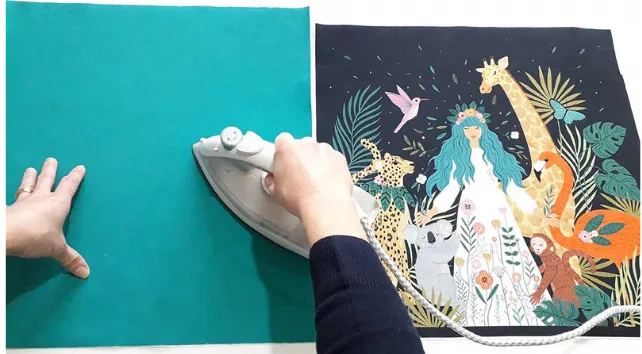
Apply the fusible interlining to the wrong side of the front and back cushion pieces following the manufacturers instructions.
Step 3:
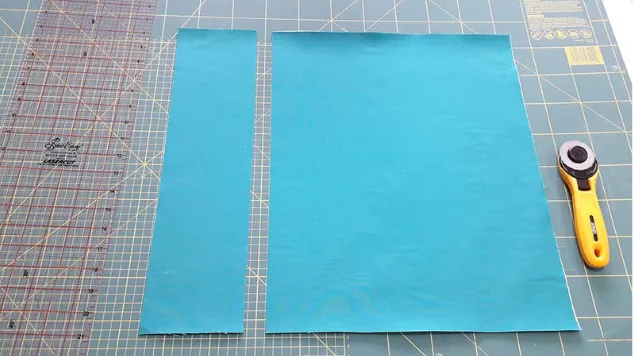
Measure and mark a line 11.5cm from the shortest edge of the back piece.
Step 4:
Cut along the line to for the zip opening.
Step 5:
Tidy the 2 raw edges of the zip opening using an overlocker or zig zag stitch.
Step 6:
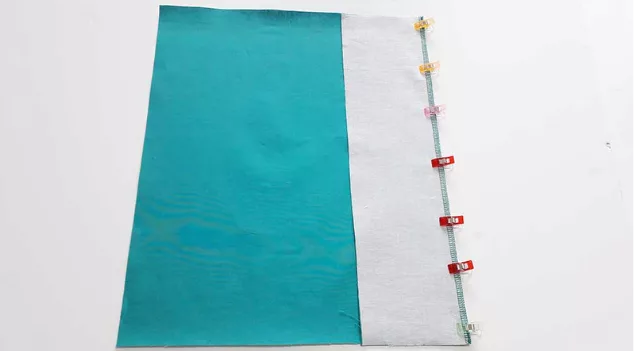
Clip or pin the 2 sides of the zip opening right sides together.
Step 7:
Baste along the zip opening (it’s important to use a large length stitch for easy stitch removal later) Use a 1.5cm seam allowance and contrasting thread.
Step 8:
Once stitched, Press the seam open.
Step 9:
Align the zipper teeth along the seam line.Position the zip pull side down zip bar at the bottom of the project, pull overhanging the top.
Step 10:
Tape or baste the zip in place.
Step 11:
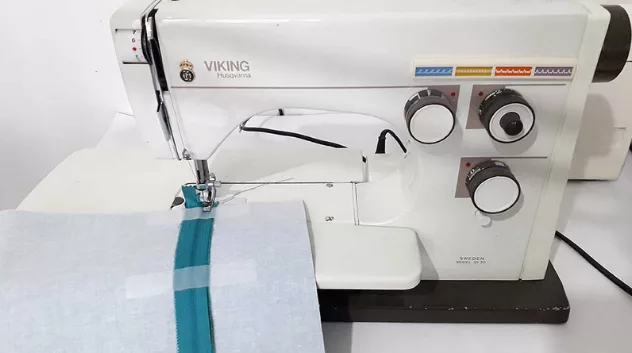
Starting at the end nearest the zip pull, begin sewing using a 2.5 length straight stitch and a zipper foot. Backstitch at the start then sew down to the bottom of the zip. If the zip has a metal bar be careful near the bottom.
Step 12:
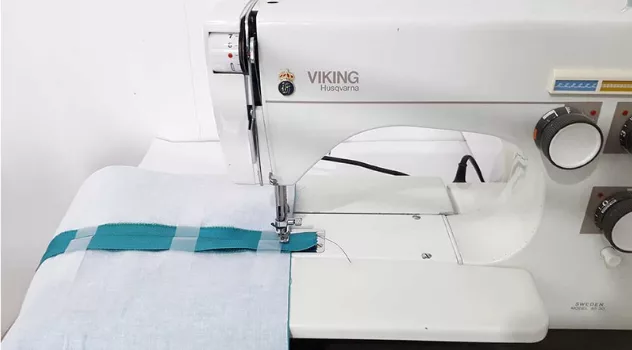
Stop sewing just below the bottom bar. Turn and sew across the bottom carefully. Backstitch for added strength.
Step 13:
Turn and sew along the other side of the zip teeth to the top and backstitch
Step 14:
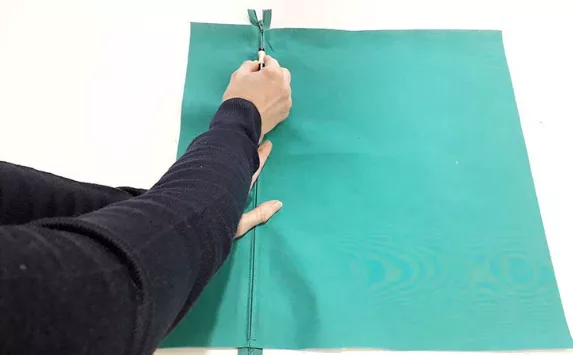
Turn the cushion back over and unpick the basting stitches using a seam ripper. Remove all loose threads (a lint roller can help with this) then test the zip.
Step 15:
Fold the cushion front panel in half to find the bottom centre. Mark it with a pin.
Step 16:
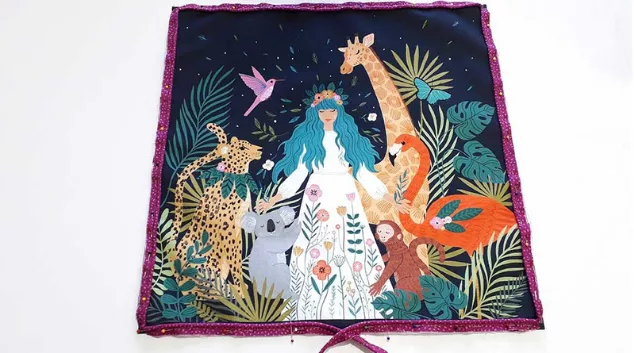
On the right side of the cushion panel, pin the piping in place from the centre mark leaving a 5cm tail:
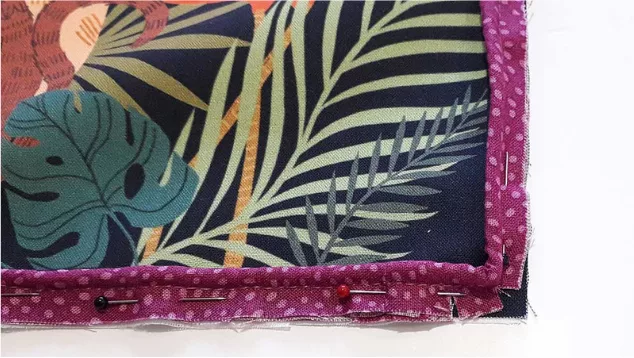
- With the piping cord inwards, align the raw edges of the piping tape with the raw edge of the cushion front & pin in place.
- Clip up to the piping stitch line in the piping tape to ease the piping around the corners.
- Keep pinning until the pin mark is reached again. Don’t cut the tail end.
Step 17:
Baste the piping in place 8cm from the centre bottom mark. Stop sewing 8cm from the centre bottom leaving a 16cm gap. When sewing, use a zipper foot and sew close to the piping cord.
Step 18:
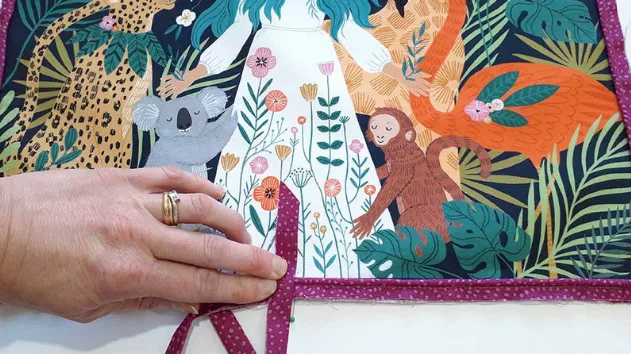
To join the piping take the tail from the right, move the left to one side. Position the piping tail along the bottom edge overlapping the centre bottom pin.
Step 19:
Align the crease of a spare piece of piping (or the other tail end) along the left of the pin. The spare piping should be at 90 degrees to the tape being attached.
Step 20:
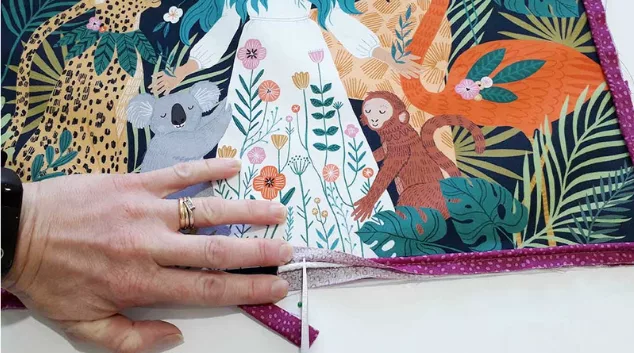
Mark the piping to be attached along the left side of the tape from step 19.
Cut along the marking.
Step 21:
Repeat steps 18 to 20 for the left side, marking and cutting the tape right of the pin. The ends will form a small overlap
Step 22:
Unpick the 2 ends of the piping to the seamline from step 17.
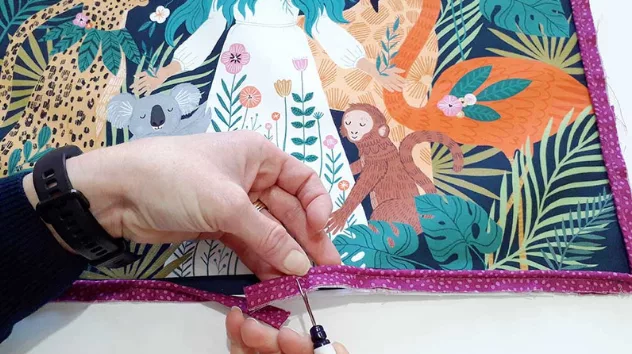
Step 23:
Trim the ends of the cord, NOT the piping casing, to the pin mark.
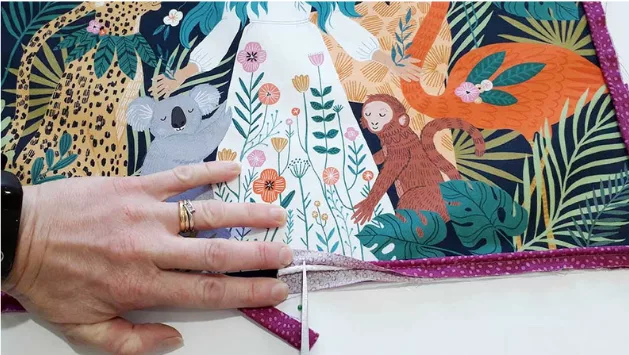
Step 24:
Open out the ends of the piping casing. Line them up right sides facing at 90 degrees to each other in an L shape and pin.
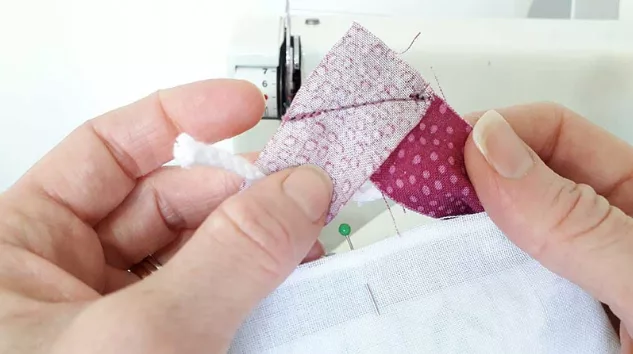
Step 25:
Draw a line from the recessed casing corner on the left, to the recessed corner on the right. A triangle shape should form between the 2 outer edges and the drawn line.
Step 26:
Sew along the drawn line with a stitch length of 2.5, backstitching start and end.
Step 27:
Cut off the corner to leave a 5mm seam allowance and press the seam open. Tuck in and align the cord ends then finish basting the piping in place.
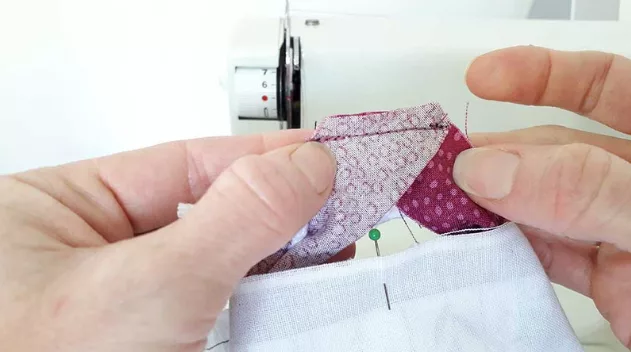
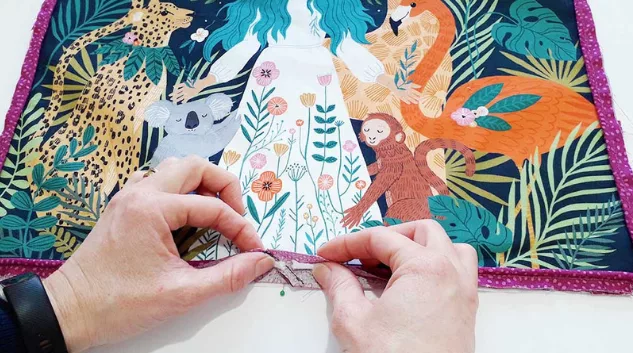
Step 28:
Align the cushion front and back rights sides together. Vertically pin the opening end of the zip then unzip it by 10cm.
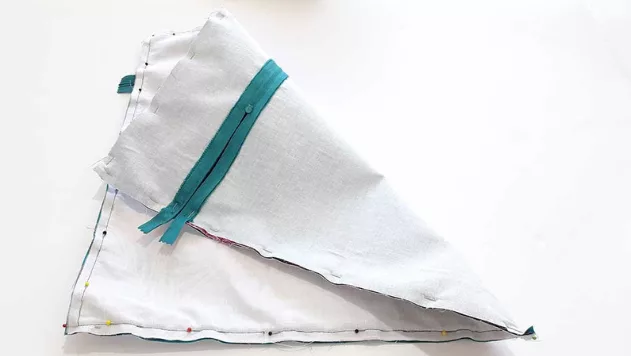
Step 29:
Clip or pin the 4 sides of the cushion pieces together.
Step 30:
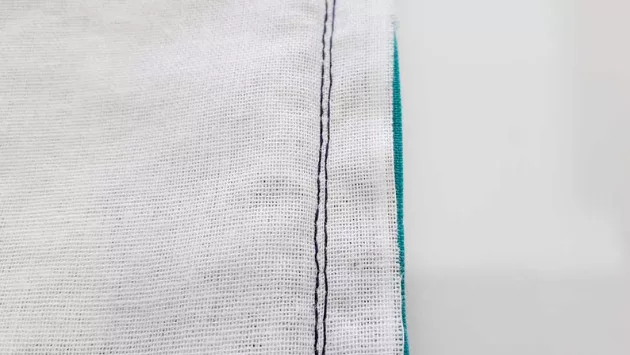
Sew the cushion front and back together using a zipper foot. Sew inside or along the basted piping seam to achieve a snug fit and hide the basting stitches Carefully backstitch over the 2 tape ends for strength.
Step 31:
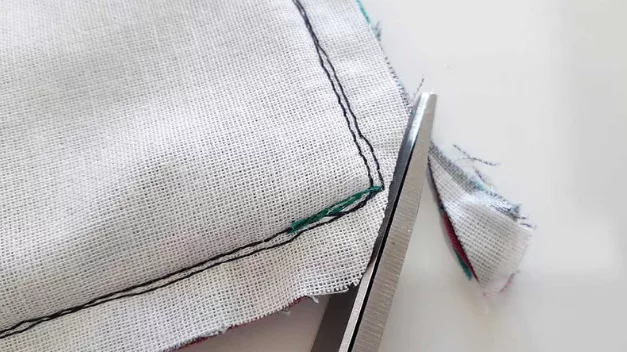
Clip the corners and turn the cushion out the right way.
Step 32:
For a polished finish, press the completed cushion cover.
Voila! You’re all done! We hope you feel proud of your accomplishment and will enjoy your new cushion.
Want to follow along with printed instructions instead? We’ve got you covered!
Click the button below to download this step-by-step printable tutorial.
Boring Legal Bit: If you follow any tutorial or guidance found in this post, or on this blog, you agree to be bound by our disclaimer which can be viewed here
Don’t forget to share your finished makes with us – tag us @PlushAddict as we LOVE seeing your projects!
We hope you enjoyed this tutorial!

Follow Plush Addict on social media and keep an eye out for more tutorials!